
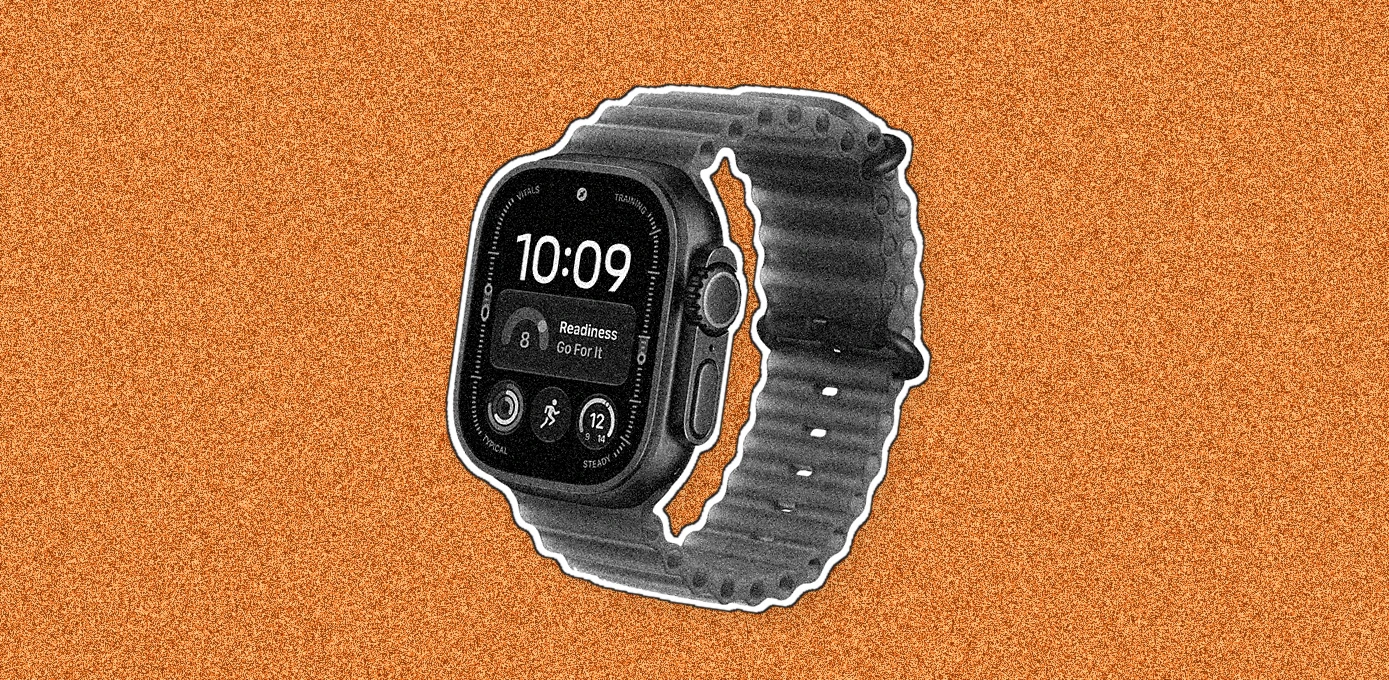
The Apple Watch Ultra 4 went on sale September 18 at $799, the same price as the Ultra 3, and the Ultra 2, and the original. Apple has been remarkably consistent on Ultra pricing, and just as consistent on the design: the case, display, and connectivity are unchanged from last year.
So where did the money go? Battery, sensors, and the chip. Apple raised normal battery life from 42 to 50 hours, added workout modes that track for up to 45 hours, and rebuilt the heart-rate system to take readings every five seconds.
Let’s go through it.
What’s new
Battery. Everyday use goes from 42 to 50 hours. On paper that’s incremental, but Apple Watch owners are going to appreciate it, because battery has been the main gripe with this watch since day one. Low Power Mode also gets a bump, from 72 to 84 hours. The bigger deal is the new workout mode: it lasts up to 45 hours without dropping GPS or heart-rate accuracy. For context, the original Ultra managed about 36 hours of normal use in 2022, so the line has gained roughly 40% in four years.
Heart-rate sensing. The redesigned system samples heart rate every five seconds, a 60x increase over earlier models, and takes HRV readings every five minutes. This is a real jump in the quality of the data feeding everything else.
Readiness. A new 0–10 score built from activity, sleep, vitals, and recovery, updated through the day. This is Apple catching up to Oura, Whoop, and Garmin. Those brands have spent years rolling all your separate health signals into one number, and that single number has been a major pull for serious fitness people. Apple is now offering the same thing to keep those users from switching. It’s the feature I’d call the most important in this release, because it turns a pile of metrics into one plain answer: train today, or rest.
S11 chip. For the nerds: it’s built from A20 Pro-derived CPU, GPU, and Neural Engine parts. It enables the new Audio Intelligence features, but read the fine print. Live Rewind and Siri Recap arrive in beta in late 2026, need an Apple Intelligence iPhone 16 or later, start in English only, and won’t initially be available in the EU. Plenty of restrictions. Apple is clearly testing these on the new hardware before rolling them out widely.
What didn’t change. The titanium case, the display, satellite messaging, 5G, and the price. The only visible newness is a titanium band and translucent Ocean bands.
Four generations, one design
The first Ultra launched in 2022, and Apple has refreshed it every year except 2024, which only brought a black finish for the Ultra 2. Here’s what actually changed under the hood.
| Ultra (2022) | Ultra 2 (2023) | Ultra 3 (2025) | Ultra 4 (2026) | |
|---|---|---|---|---|
| Chip | S8 | S9 | S10 | S11 |
| Battery (normal / low power) | 36h / 60h | 36h / 72h | 42h / 72h | 50h / 84h |
| Longest full-accuracy GPS workout | ~12h | ~12h | Extended mode | 45h |
| Display | 2,000 nits | 3,000 nits | Larger wide-angle OLED | Same as Ultra 3 |
| Connectivity | LTE | LTE | 5G + satellite | Same as Ultra 3 |
| Health headline | Temperature, depth gauge | On-device Siri | Hypertension alerts, sleep score | 5-second HR, Readiness |
| Launch price | $799 | $799 | $799 | $799 |
Who this watch is for
Endurance athletes buying their first Apple Watch. If you do triathlons, duathlons, or ultra-distance events, and you like the Apple ecosystem and the cleanness of its interface but don’t want to compromise on training metrics, this is finally the Apple Watch for you. The 45-hour full-accuracy mode is the one feature no earlier Ultra offers.
Ultra 1 and Ultra 2 owners. You get roughly 40% more battery than the original, plus satellite messaging, 5G, a bigger display, and the new sensors. Your watch has done four or five years of service. This is the natural upgrade point.
Recovery-focused trainers. It’s the first Apple Watch with readiness metrics built in, so you no longer need a ring or a band alongside it.
Who should wait
Ultra 3 owners. Same design, same display, same connectivity. Eight extra hours of battery and the new sensors are the whole difference. At $799, that’s money you’ll regret unless you get a strong trade-in deal. Skip this year.
One thing worth keeping in mind: Apple builds its watches and phones to last around three years of updates and use. That’s what an Apple technician told me back when I worked at a telco retail store selling iPhones, and it matches what Apple’s support timelines suggest. So your Ultra 3 has a lot of life left.
Everyone else. If you’re not an endurance athlete and just want solid casual fitness tracking, the $399 Series 12 has the same sensing system, the same Readiness score, and the same S11 chip. It’s not built for extreme sports, but it will do the job.
Want the latest smartwatch news first? Add SmartwatchCrunch as a preferred source so our coverage shows up higher in your Google results.