
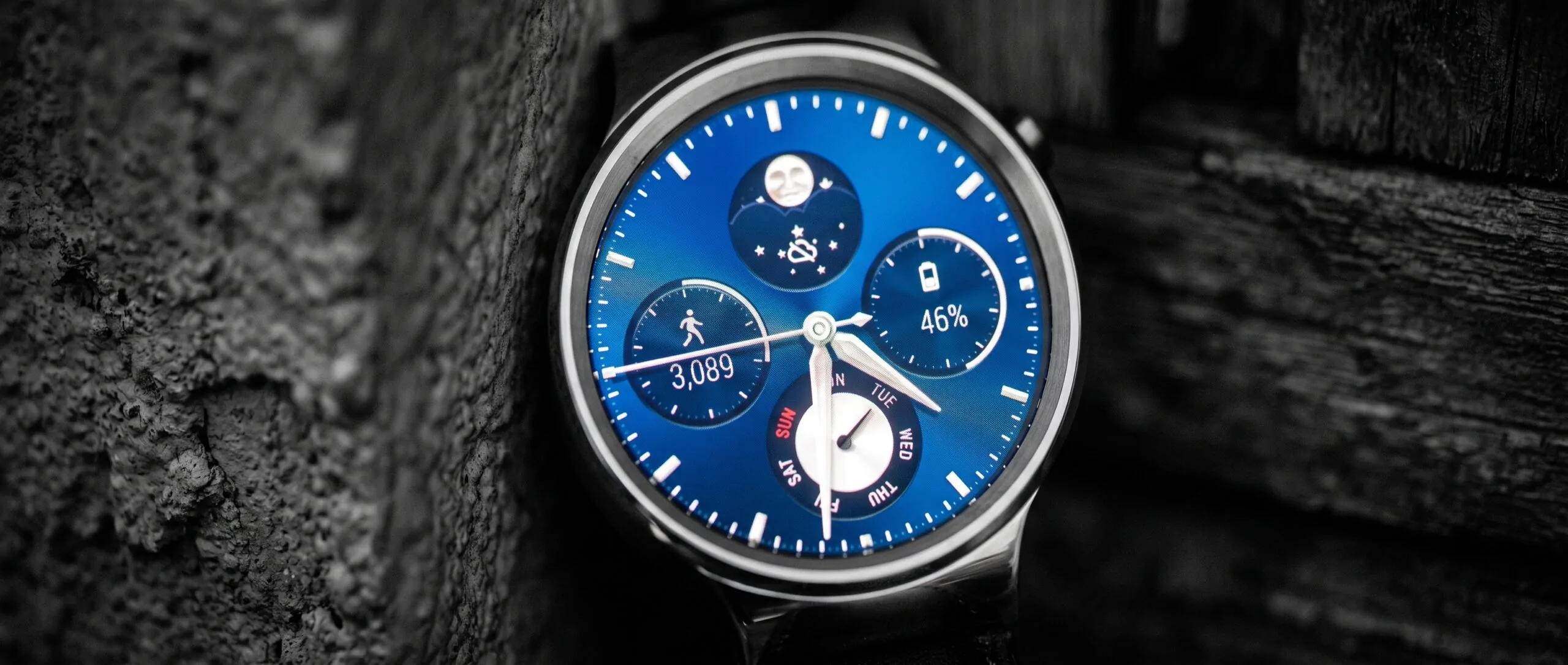
In September 2015, the Huawei Watch became one of the first two Android Wear smartwatches that officially worked with an iPhone.
Fast Forward to 2026, that cross-platform era is over. Most Wear OS watches sold today require an Android phone.
If you own an iPhone in 2026, your realistic choices are an Apple Watch, a Garmin or another platform-neutral watch.
What happened in September 2015:
Google opened Android Wear to iPhone users two days before the Huawei Watch launch.
August 31, 2015: Android Wear comes to iPhone. Google released an Android Wear app for iPhone 5, 5c, 5s, 6 and 6 Plus running iOS 8.2 or later. Google promised that all future Android Wear watches would support iOS. Two days later Huawei shipped with a native support.
September 17, 2015: US shipping begins. Prices ran from $349 for the stainless steel model with a leather band to $799 for the top finishes, sold through the Google Store, Amazon, Best Buy and Huawei.
By the end of September 2015, the LG Watch Urbane and the Huawei Watch were the only two Android Wear watches officially supported on iPhone.
What the Huawei Watch could and couldn’t do with an iPhone
Paired with an iPhone, the Huawei Watch like most watches of its time was mainly a notification mirror (with Google’s services built in). Essentially you could read almost everything but respond to very little.
Apple’s restrictions blocked third-party apps and most replies.
| Worked with iPhone | Didn’t work with iPhone |
|---|---|
| Notifications from every iOS app, including calls and texts | Replying to texts or iMessages |
| Google Now cards and “OK Google” voice search | Asking the watch to send a message or make a call |
| Step and heart rate tracking through Google Fit | Third-party Android Wear apps from Google Play |
| Google apps such as Weather, Translate and Alarm | Most third-party watch faces, beyond a curated set |
| Replying to Gmail, adding Google Calendar events | Acting on notifications from Apple’s own apps |
Huawei Watch (2015) specs
The Huawei Watch was built to look like a traditional Swiss watch: a round 42 mm steel case, sapphire crystal and standard 18 mm straps.
| Spec | Huawei Watch (2015) |
|---|---|
| Announced / released | March 2015 (MWC) / September 2015 |
| US launch price | $349 to $799, depending on finish |
| Software at launch | Android Wear 1.3 |
| Works with | Android 4.3 and later, iOS 8.2 and later |
| Size | 42 mm diameter, 11.3 mm thick |
| Display | 1.4-inch round AMOLED, 400 x 400 pixels, 286 ppi |
| Materials | Sapphire crystal, 316L stainless steel; black DLC and rose-gold-plated versions |
| Processor and memory | 1.2 GHz Qualcomm Snapdragon 400, 512 MB RAM, 4 GB storage |
| Connectivity | Bluetooth 4.1, Wi-Fi |
| Sensors | Heart rate (PPG), gyroscope, accelerometer, barometer |
| Battery | 300 mAh, rated for about a day and a half |
| Water resistance | IP67 |
| Straps | Standard 18 mm |
From 2015 to 2026: how Wear OS iPhone support rose and fell
Google spent three years courting iPhone owners, but eventually got frustrated. A partnership with Samsung and its purchase of Fitbit enabled Google to make WearOS exclusively Android.
The following timeline can help you understand what happened over the years.
| Date | What happened |
|---|---|
| Aug 2015 | Google launches the Android Wear app for iPhone; only the LG Watch Urbane is supported at first |
| Sep 2015 | The Huawei Watch launches with iPhone support from day one |
| 2017 | One in three new Android Wear watch owners also uses an iPhone, according to Google |
| Mar 2018 | Google renames Android Wear to “Wear OS by Google,” calling it an operating system “for everyone” |
| Oct 2018 | Huawei drops Wear OS: its new Watch GT runs Huawei’s own LiteOS, while still pairing with iPhones |
| Aug 2021 | Samsung’s Galaxy Watch 4, the first Wear OS 3 watch, will not pair with iPhones, Samsung confirms |
| 2022 onward | Google’s Pixel Watch launches as an Android-only watch |
| 2025 to 2026 | Third-party apps such as Merge relay iPhone notifications to some Wear OS watches, unofficially |
Can you use a Wear OS watch with an iPhone in 2026?
Not officially, if you mean a current Galaxy Watch or Pixel Watch. Your options depend on how old the watch is and how much you’ll tolerate workarounds.
- Galaxy Watch 4 and later: no. Samsung confirmed in 2021 that these watches won’t pair with iPhones, and setup requires an Android phone with Google services.
- Pixel Watch: no. Google’s watch works only with Android phones.
- Older Wear OS 2 watches: these were the last generation with official iPhone support, and only with basic features like notifications and fitness.
- Workaround apps: third-party apps such as Merge can relay iPhone notifications and Apple Health data to many Wear OS watches. The watch still needs an Android phone for its first setup, and Google and Samsung don’t support this route.
FAQ
Was the Huawei Watch the first Android Wear watch to work with iPhone? It was one of the first two. The LG Watch Urbane got iPhone support on August 31, 2015; the Huawei Watch launched two days later with support built in.
Which iPhones worked with Android Wear in 2015? The iPhone 5, 5c, 5s, 6 and 6 Plus running iOS 8.2 or later.
Could you reply to texts from a Huawei Watch paired with an iPhone? No. You could read notifications and reply to Gmail, but replying to texts and iMessages wasn’t possible because of Apple’s restrictions.
Does the Galaxy Watch work with iPhone? Not since the Galaxy Watch 4 in 2021, when Samsung moved to Wear OS. Older Tizen-based Galaxy Watches did work with iPhones.
Why did Google rename Android Wear to Wear OS? Partly because of iPhone users. Google said one in three new Android Wear owners in 2017 also used an iPhone, and the old name implied you needed Android.
Does Huawei still make Wear OS watches? No. Huawei’s last Wear OS model was the Huawei Watch 2 in 2017. Since the Watch GT in 2018, Huawei watches run the company’s own software.